Electroencephalography is the derivation and recording of human brain waves using small adhesive electrodes on the scalp. The examination is painless and non-stressful. An EEG is used to examine functional disorders of the brain. Reasons for the examination are usually acute or chronic disturbances of consciousness, as can occur in epilepsy or dementia, or where there are other explained symptoms that may possibly indicate focal epileptic seizures.
Examination procedure
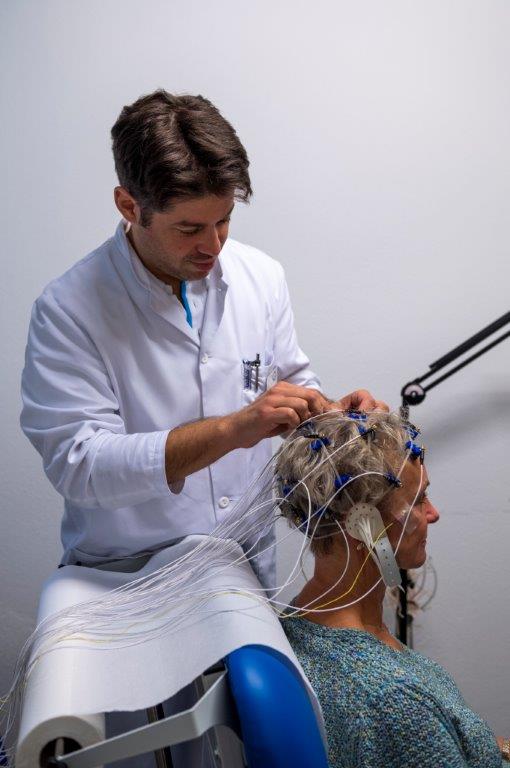
The examination takes place in a comfortable chair. An elastic cap is placed on the head, and surface electrodes are placed underneath to record the brain’s electrical activity. The patient should sit in a relaxed posture during the examination and keep the eyes loosely closed. Movements such as talking, coughing, swallowing or blinking are recorded and can mask the EEG waveform, so these should be avoided.
During the examination, the patient is asked to open and close his eyes. This happens several times. Over a period of three minutes, the patient should hyperventilate (breathe deeply and forcefully) when prompted to do so. If necessary, flickering light stimulation is performed using a stroboscope lamp (these factors can lower the seizure threshold, see Epilepsy). The examination, including preparation, takes about 45 minutes.